Brief Control
Convert end use and appearance intent into composition, construction, GSM, width, color, finish, quantity and delivery fields.
Development and release support
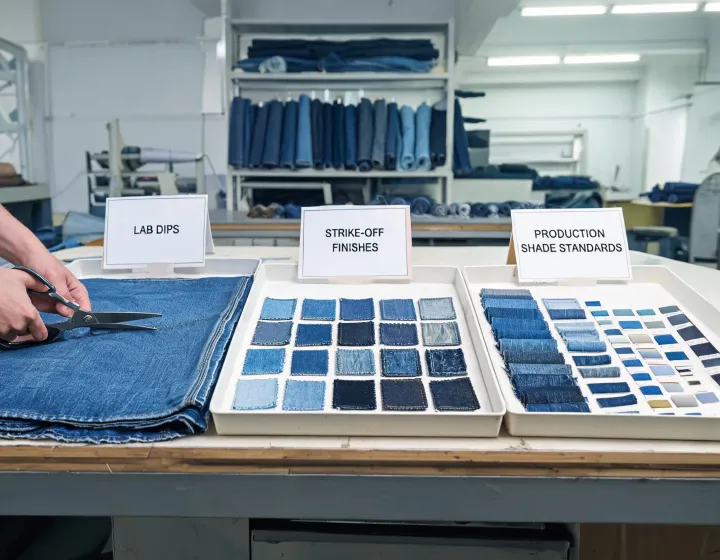
Apparel fabric development moves through construction, shade, finishing, physical testing and bulk approval. Kaihara records what each stage can confirm and what remains open.
The process is designed for denim and woven apparel teams that need comparable parameters rather than a collection-only response. Fiber content, yarn count, warp and weft, GSM, usable width, shade standard, finishing route and requested methods form the baseline.
Service overview
Convert end use and appearance intent into composition, construction, GSM, width, color, finish, quantity and delivery fields.
Name whether a handloom, lab dip, strike-off, wash trial or pre-production cutting is being approved.
Pair colorfastness, shrinkage, pilling, tensile or tear results with method, conditioning and article scope.
Connect shade, inspection, finish and available documents to the production and dye-lot reference.
Illustrative development cases
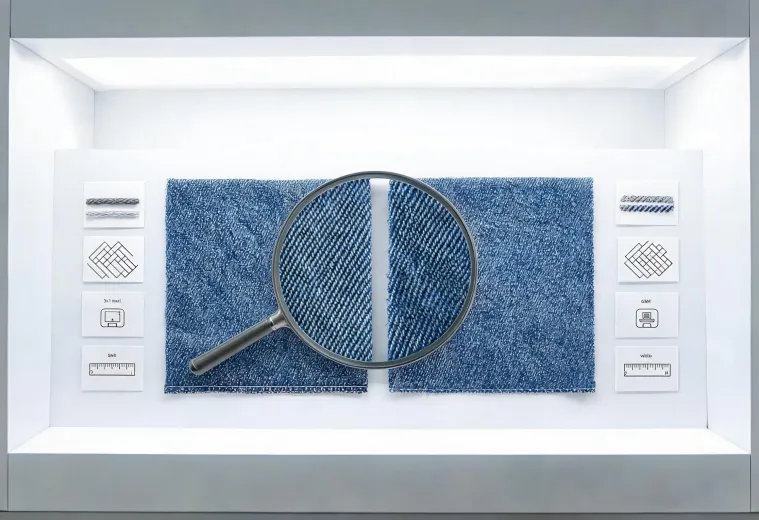
Background: A design brief asks for a dry hand and strong twill character but provides only an indigo visual reference.
Process: The review adds fiber content, warp and weft yarn count, twill direction, target GSM, usable width, shrinkage method, shade standard and wash route. Handloom and wash-trial approvals are separated.
Result: The buyer receives a comparable construction brief and a defined sample path. No production result is claimed until the selected article and lot are evaluated.
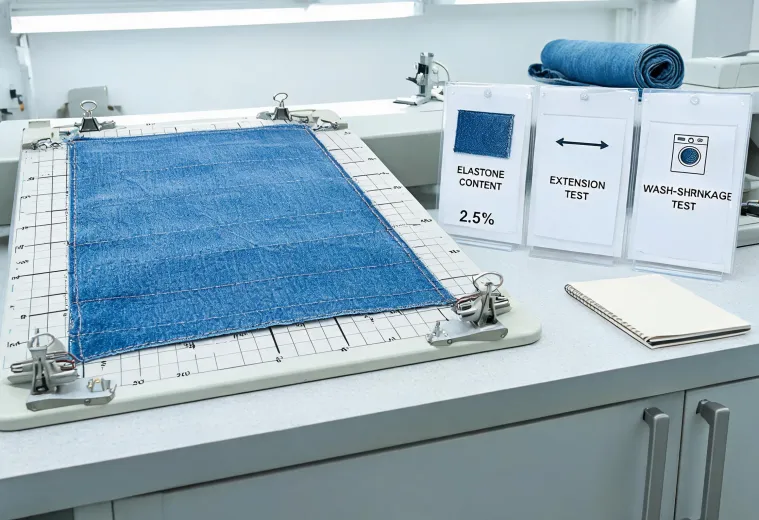
Background: A sourcing team needs mobility but has not defined the stretch level, recovery, wash program or garment construction.
Process: The brief records fiber blend, yarn structure, elongation direction, GSM, width, dimensional stability, finishing sequence and sample conditioning. The final garment wash remains a separate validation.
Result: Candidate fabrics can be reviewed against the same fields, while limits caused by wash chemistry, color and construction remain explicit.
Share the garment use, desired construction, shade, finish, tests, quantity and delivery context.